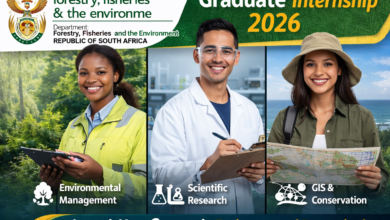
Department of Forestry, Fisheries and the Environment Graduate Internship Programme 2026

The DFFE Graduate Internship Programme 2026 offers an excellent opportunity for unemployed South African graduates who want to gain valuable work experience in the environmental, forestry, fisheries, and sustainability sectors. The Department of Forestry, Fisheries and the Environment Graduate Internship Programme 2026
The DFFE Graduate Internship Programme 2026 offers an excellent opportunity for unemployed South African graduates who want to gain valuable work experience in the environmental, forestry, fisheries, and sustainability sectors. The programme is designed to help young graduates transition from academic learning to professional careers by providing structured workplace exposure in a government environment.
The Department of Forestry, Fisheries and the Environment (DFFE) plays a critical role in protecting South Africa’s natural resources and promoting sustainable environmental management. Through this internship programme, the department supports skills development and capacity building while helping graduates develop practical knowledge in their respective fields.
For graduates who are passionate about environmental conservation, natural resource management, public administration, and scientific research, the DFFE internship programme provides an ideal starting point for building a meaningful and impactful career.
About the DFFE Graduate Internship Programme
The DFFE Graduate Internship Programme aims to equip graduates with practical skills, professional development, and workplace experience. Participants are placed in different departments within the organisation, where they work alongside experienced professionals and specialists.
Interns are exposed to the daily operations of government institutions and learn how policies, environmental regulations, and conservation programmes are implemented across South Africa. The programme also helps interns develop important workplace skills such as communication, teamwork, project coordination, and professional ethics.
The internship usually runs for 12 to 24 months, depending on the department and field of study. During the programme, interns may receive a monthly stipend to assist with transportation and living expenses.
This structured training programme ensures that graduates gain the experience needed to become competitive in the job market while contributing to environmental sustainability initiatives in the country.
Fields Offered in the Internship
The DFFE Graduate Internship Programme offers opportunities across a wide range of professional and technical fields. These placements allow graduates to apply their academic knowledge in practical settings while learning from experienced government professionals.
1. Environmental Management
Graduates in environmental-related disciplines may work in environmental monitoring, conservation planning, and environmental impact assessments. Interns assist in projects that focus on protecting ecosystems and promoting sustainable environmental practices.
This field helps graduates gain practical experience in environmental policy implementation and conservation programmes.
2. Forestry Management
The forestry sector is an important part of South Africa’s natural resource management system. Interns in forestry may work on projects related to forest conservation, sustainable forestry management, and the monitoring of forest ecosystems.
Graduates gain knowledge of how forestry policies are implemented and how forests contribute to environmental sustainability.
3. Fisheries and Marine Science
Graduates with backgrounds in marine science or fisheries management may be involved in projects that focus on protecting marine ecosystems and managing fishing resources.
Interns may assist with data collection, marine conservation initiatives, and research programmes that support sustainable fisheries management.
4. Environmental Research and Scientific Support
Some internship placements focus on scientific research and environmental analysis. Graduates may assist with environmental studies, data analysis, biodiversity monitoring, and climate change research.
These roles provide valuable experience for graduates who wish to pursue careers in environmental science and research.
5. Geographic Information Systems (GIS)
GIS is an important tool used in environmental planning and monitoring. Interns in this field may assist with mapping environmental data, analysing geographic information, and supporting environmental research projects.
This field helps graduates develop technical skills in geospatial analysis and environmental data management.
6. Communication and Public Awareness
Environmental communication plays an important role in educating the public about conservation and sustainability. Graduates in communication or media-related fields may assist with awareness campaigns, public information programmes, and environmental outreach initiatives.
Interns gain experience in digital communication, content creation, and public engagement strategies.
7. Finance and Supply Chain Management
The department also offers internships in financial management and procurement support. Graduates may assist with budgeting processes, financial reporting, and supply chain operations within the organisation.
These roles help graduates develop administrative and financial management skills within the public sector.
8. Human Resources and Administration
Human resources and administrative internships focus on supporting staff management, recruitment processes, training coordination, and organisational administration.
Graduates in business administration or human resource management gain valuable exposure to government workplace practices.
Qualifications Required
Applicants interested in the DFFE Graduate Internship Programme must hold a relevant tertiary qualification from a recognised institution. The required qualification depends on the specific internship field.
Typical qualifications include:
- Bachelor’s Degree or National Diploma in Environmental Science
- Degree in Forestry or Natural Resource Management
- Qualification in Marine Biology or Fisheries Management
- Degree in Geographic Information Systems (GIS)
- Qualification in Environmental Management
- Degree in Public Administration
- Qualification in Communication or Media Studies
- Degree or Diploma in Finance, Accounting, or Supply Chain Management
- Qualification in Human Resource Management
- Degree in Biology, Ecology, or Conservation Science
Graduates who have recently completed their studies and have little or no work experience are strongly encouraged to apply.
Minimum Requirements
To qualify for the DFFE Graduate Internship Programme, applicants generally need to meet the following requirements:
- Must be a South African citizen
- Must have completed a relevant tertiary qualification
- Must be unemployed
- Must not have participated in a similar government internship programme before
- Strong communication and teamwork skills
- Basic computer literacy
- Passion for environmental sustainability and public service
Preference may be given to candidates who demonstrate strong academic performance and a commitment to environmental conservation.
Skills Developed During the Internship
The internship programme focuses on developing a wide range of professional skills that prepare graduates for long-term careers. These include:
- Environmental research and analysis
- Project coordination and reporting
- Data collection and environmental monitoring
- Policy implementation and regulatory compliance
- Communication and stakeholder engagement
- Professional workplace conduct
These skills are highly valuable for graduates who want to pursue careers in environmental management, government administration, and sustainability initiatives.
Benefits of the DFFE Internship Programme
Participating in the DFFE Graduate Internship Programme provides several benefits for young graduates.
Practical Government Experience
Interns gain direct experience working within a national government department responsible for environmental management.
Professional Development
Participants develop workplace skills that improve their employability and career readiness.
Monthly Stipend
Interns usually receive a monthly stipend to support them during the internship period.
Networking Opportunities
Working within a government department allows interns to connect with environmental professionals, researchers, and policymakers.
Career Opportunities
The experience gained during the internship can lead to future employment opportunities in government agencies, environmental organisations, research institutions, or private sector companies.
Career Opportunities After the Internship
After completing the DFFE Graduate Internship Programme, participants may pursue careers in several sectors. Possible career paths include:
- Environmental officer
- Conservation specialist
- Marine resource manager
- Forestry officer
- GIS analyst
- Environmental researcher
- Sustainability consultant
- Public administration officer
Graduates may also pursue advanced studies in environmental science or natural resource management to further expand their career opportunities.
Why Choose the DFFE Graduate Internship?
The Department of Forestry, Fisheries and the Environment Graduate Internship Programme 2026 provides graduates with the opportunity to contribute to environmental sustainability while gaining valuable professional experience.
South Africa faces significant environmental challenges, including climate change, biodiversity protection, and natural resource management. Skilled professionals are needed to address these challenges and promote sustainable development.
For graduates who are passionate about protecting the environment and making a positive impact on society, the DFFE internship offers a valuable platform for career growth and professional development in one of the country’s most important sectors. is designed to help young graduates transition from academic learning to professional careers by providing structured workplace exposure in a government environment.
The Department of Forestry, Fisheries and the Environment (DFFE) plays a critical role in protecting South Africa’s natural resources and promoting sustainable environmental management. Through this internship programme, the department supports skills development and capacity building while helping graduates develop practical knowledge in their respective fields.
For graduates who are passionate about environmental conservation, natural resource management, public administration, and scientific research, the DFFE internship programme provides an ideal starting point for building a meaningful and impactful career.
About the DFFE Graduate Internship Programme
The DFFE Graduate Internship Programme aims to equip graduates with practical skills, professional development, and workplace experience. Participants are placed in different departments within the organisation, where they work alongside experienced professionals and specialists.
Interns are exposed to the daily operations of government institutions and learn how policies, environmental regulations, and conservation programmes are implemented across South Africa. The programme also helps interns develop important workplace skills such as communication, teamwork, project coordination, and professional ethics.
The internship usually runs for 12 to 24 months, depending on the department and field of study. During the programme, interns may receive a monthly stipend to assist with transportation and living expenses.
This structured training programme ensures that graduates gain the experience needed to become competitive in the job market while contributing to environmental sustainability initiatives in the country.
Fields Offered in the Internship
The DFFE Graduate Internship Programme offers opportunities across a wide range of professional and technical fields. These placements allow graduates to apply their academic knowledge in practical settings while learning from experienced government professionals.
1. Environmental Management
Graduates in environmental-related disciplines may work in environmental monitoring, conservation planning, and environmental impact assessments. Interns assist in projects that focus on protecting ecosystems and promoting sustainable environmental practices.
This field helps graduates gain practical experience in environmental policy implementation and conservation programmes.
2. Forestry Management
The forestry sector is an important part of South Africa’s natural resource management system. Interns in forestry may work on projects related to forest conservation, sustainable forestry management, and the monitoring of forest ecosystems.
Graduates gain knowledge of how forestry policies are implemented and how forests contribute to environmental sustainability.
3. Fisheries and Marine Science
Graduates with backgrounds in marine science or fisheries management may be involved in projects that focus on protecting marine ecosystems and managing fishing resources.
Interns may assist with data collection, marine conservation initiatives, and research programmes that support sustainable fisheries management.
4. Environmental Research and Scientific Support
Some internship placements focus on scientific research and environmental analysis. Graduates may assist with environmental studies, data analysis, biodiversity monitoring, and climate change research.
These roles provide valuable experience for graduates who wish to pursue careers in environmental science and research.
5. Geographic Information Systems (GIS)
GIS is an important tool used in environmental planning and monitoring. Interns in this field may assist with mapping environmental data, analysing geographic information, and supporting environmental research projects.
This field helps graduates develop technical skills in geospatial analysis and environmental data management.
6. Communication and Public Awareness
Environmental communication plays an important role in educating the public about conservation and sustainability. Graduates in communication or media-related fields may assist with awareness campaigns, public information programmes, and environmental outreach initiatives.
Interns gain experience in digital communication, content creation, and public engagement strategies.
7. Finance and Supply Chain Management
The department also offers internships in financial management and procurement support. Graduates may assist with budgeting processes, financial reporting, and supply chain operations within the organisation.
These roles help graduates develop administrative and financial management skills within the public sector.
8. Human Resources and Administration
Human resources and administrative internships focus on supporting staff management, recruitment processes, training coordination, and organisational administration.
Graduates in business administration or human resource management gain valuable exposure to government workplace practices.
Qualifications Required
Applicants interested in the DFFE Graduate Internship Programme must hold a relevant tertiary qualification from a recognised institution. The required qualification depends on the specific internship field.
Typical qualifications include:
- Bachelor’s Degree or National Diploma in Environmental Science
- Degree in Forestry or Natural Resource Management
- Qualification in Marine Biology or Fisheries Management
- Degree in Geographic Information Systems (GIS)
- Qualification in Environmental Management
- Degree in Public Administration
- Qualification in Communication or Media Studies
- Degree or Diploma in Finance, Accounting, or Supply Chain Management
- Qualification in Human Resource Management
- Degree in Biology, Ecology, or Conservation Science
Graduates who have recently completed their studies and have little or no work experience are strongly encouraged to apply.
Minimum Requirements
To qualify for the DFFE Graduate Internship Programme, applicants generally need to meet the following requirements:
- Must be a South African citizen
- Must have completed a relevant tertiary qualification
- Must be unemployed
- Must not have participated in a similar government internship programme before
- Strong communication and teamwork skills
- Basic computer literacy
- Passion for environmental sustainability and public service
Preference may be given to candidates who demonstrate strong academic performance and a commitment to environmental conservation.
Skills Developed During the Internship
The internship programme focuses on developing a wide range of professional skills that prepare graduates for long-term careers. These include:
- Environmental research and analysis
- Project coordination and reporting
- Data collection and environmental monitoring
- Policy implementation and regulatory compliance
- Communication and stakeholder engagement
- Professional workplace conduct
These skills are highly valuable for graduates who want to pursue careers in environmental management, government administration, and sustainability initiatives.
Benefits of the DFFE Internship Programme
Participating in the DFFE Graduate Internship Programme provides several benefits for young graduates.
Practical Government Experience
Interns gain direct experience working within a national government department responsible for environmental management.
Professional Development
Participants develop workplace skills that improve their employability and career readiness.
Monthly Stipend
Interns usually receive a monthly stipend to support them during the internship period.
Networking Opportunities
Working within a government department allows interns to connect with environmental professionals, researchers, and policymakers.
Career Opportunities
The experience gained during the internship can lead to future employment opportunities in government agencies, environmental organisations, research institutions, or private sector companies.
Career Opportunities After the Internship
After completing the DFFE Graduate Internship Programme, participants may pursue careers in several sectors. Possible career paths include:
- Environmental officer
- Conservation specialist
- Marine resource manager
- Forestry officer
- GIS analyst
- Environmental researcher
- Sustainability consultant
- Public administration officer
Graduates may also pursue advanced studies in environmental science or natural resource management to further expand their career opportunities.
Why Choose the DFFE Graduate Internship?
The Department of Forestry, Fisheries and the Environment Graduate Internship Programme 2026 provides graduates with the opportunity to contribute to environmental sustainability while gaining valuable professional experience.
South Africa faces significant environmental challenges, including climate change, biodiversity protection, and natural resource management. Skilled professionals are needed to address these challenges and promote sustainable development.
For graduates who are passionate about protecting the environment and making a positive impact on society, the DFFE internship programme offers a valuable platform for career growth and professional development in one of the country’s most important sectors.
The DFFE Graduate Internship 2026 offers an excellent opportunity for unemployed South African graduates who want to gain valuable work experience in the environmental, forestry, fisheries, and sustainability sectors. The is designed to help young graduates transition from academic learning to professional careers by providing structured workplace exposure in a government environment.
The Department of Forestry, Fisheries and the Environment (DFFE) plays a critical role in protecting South Africa’s natural resources and promoting sustainable environmental management. Through this internship programme, the department supports skills development and capacity building while helping graduates develop practical knowledge in their respective fields.
For graduates who are passionate about environmental conservation, natural resource management, public administration, and scientific research, the DFFE internship programme provides an ideal starting point for building a meaningful and impactful career.
About the DFFE Graduate Internship Programme
The DFFE Graduate Internship Programme aims to equip graduates with practical skills, professional development, and workplace experience. Participants are placed in different departments within the organisation, where they work alongside experienced professionals and specialists.
Interns are exposed to the daily operations of government institutions and learn how policies, environmental regulations, and conservation programmes are implemented across South Africa. The programme also helps interns develop important workplace skills such as communication, teamwork, project coordination, and professional ethics.
The internship usually runs for 12 to 24 months, depending on the department and field of study. During the programme, interns may receive a monthly stipend to assist with transportation and living expenses.
This structured training programme ensures that graduates gain the experience needed to become competitive in the job market while contributing to environmental sustainability initiatives in the country.
Fields Offered in the Internship
The DFFE Graduate Internship Programme offers opportunities across a wide range of professional and technical fields. These placements allow graduates to apply their academic knowledge in practical settings while learning from experienced government professionals.
1. Environmental Management
Graduates in environmental-related disciplines may work in environmental monitoring, conservation planning, and environmental impact assessments. Interns assist in projects that focus on protecting ecosystems and promoting sustainable environmental practices.
This field helps graduates gain practical experience in environmental policy implementation and conservation programmes.
2. Forestry Management
The forestry sector is an important part of South Africa’s natural resource management system. Interns in forestry may work on projects related to forest conservation, sustainable forestry management, and the monitoring of forest ecosystems.
Graduates gain knowledge of how forestry policies are implemented and how forests contribute to environmental sustainability.
3. Fisheries and Marine Science
Graduates with backgrounds in marine science or fisheries management may be involved in projects that focus on protecting marine ecosystems and managing fishing resources.
Interns may assist with data collection, marine conservation initiatives, and research programmes that support sustainable fisheries management.
4. Environmental Research and Scientific Support
Some internship placements focus on scientific research and environmental analysis. Graduates may assist with environmental studies, data analysis, biodiversity monitoring, and climate change research.
These roles provide valuable experience for graduates who wish to pursue careers in environmental science and research.
5. Geographic Information Systems (GIS)
GIS is an important tool used in environmental planning and monitoring. Interns in this field may assist with mapping environmental data, analysing geographic information, and supporting environmental research projects.
This field helps graduates develop technical skills in geospatial analysis and environmental data management.
6. Communication and Public Awareness
Environmental communication plays an important role in educating the public about conservation and sustainability. Graduates in communication or media-related fields may assist with awareness campaigns, public information programmes, and environmental outreach initiatives.
Interns gain experience in digital communication, content creation, and public engagement strategies.
7. Finance and Supply Chain Management
The department also offers internships in financial management and procurement support. Graduates may assist with budgeting processes, financial reporting, and supply chain operations within the organisation.
These roles help graduates develop administrative and financial management skills within the public sector.
8. Human Resources and Administration
Human resources and administrative internships focus on supporting staff management, recruitment processes, training coordination, and organisational administration.
Graduates in business administration or human resource management gain valuable exposure to government workplace practices.
Qualifications Required
Applicants interested in the DFFE Graduate Internship Programme must hold a relevant tertiary qualification from a recognised institution. The required qualification depends on the specific internship field.
Typical qualifications include:
- Bachelor’s Degree or National Diploma in Environmental Science
- Degree in Forestry or Natural Resource Management
- Qualification in Marine Biology or Fisheries Management
- Degree in Geographic Information Systems (GIS)
- Qualification in Environmental Management
- Degree in Public Administration
- Qualification in Communication or Media Studies
- Degree or Diploma in Finance, Accounting, or Supply Chain Management
- Qualification in Human Resource Management
- Degree in Biology, Ecology, or Conservation Science
Graduates who have recently completed their studies and have little or no work experience are strongly encouraged to apply.
Minimum Requirements
To qualify for the DFFE Graduate Internship Programme, applicants generally need to meet the following requirements:
- Must be a South African citizen
- Must have completed a relevant tertiary qualification
- Must be unemployed
- Must not have participated in a similar government internship programme before
- Strong communication and teamwork skills
- Basic computer literacy
- Passion for environmental sustainability and public service
Preference may be given to candidates who demonstrate strong academic performance and a commitment to environmental conservation.
Skills Developed During the Internship
The internship programme focuses on developing a wide range of professional skills that prepare graduates for long-term careers. These include:
- Environmental research and analysis
- Project coordination and reporting
- Data collection and environmental monitoring
- Policy implementation and regulatory compliance
- Communication and stakeholder engagement
- Professional workplace conduct
These skills are highly valuable for graduates who want to pursue careers in environmental management, government administration, and sustainability initiatives.
Benefits of the DFFE Internship Programme
Participating in the DFFE Graduate Internship Programme provides several benefits for young graduates.
Practical Government Experience
Interns gain direct experience working within a national government department responsible for environmental management.
Professional Development
Participants develop workplace skills that improve their employability and career readiness.
Monthly Stipend
Interns usually receive a monthly stipend to support them during the internship period.
Networking Opportunities
Working within a government department allows interns to connect with environmental professionals, researchers, and policymakers.
Career Opportunities
The experience gained during the internship can lead to future employment opportunities in government agencies, environmental organisations, research institutions, or private sector companies.
Career Opportunities After the Internship
After completing the DFFE Graduate Internship Programme, participants may pursue careers in several sectors. Possible career paths include:
- Environmental officer
- Conservation specialist
- Marine resource manager
- Forestry officer
- GIS analyst
- Environmental researcher
- Sustainability consultant
- Public administration officer
Graduates may also pursue advanced studies in environmental science or natural resource management to further expand their career opportunities.
Why Choose the DFFE Graduate Internship?
The Department of Forestry, Fisheries and the Environment Graduate Internship Programme 2026 provides graduates with the opportunity to contribute to environmental sustainability while gaining valuable professional experience.
South Africa faces significant environmental challenges, including climate change, biodiversity protection, and natural resource management. Skilled professionals are needed to address these challenges and promote sustainable development.
For graduates who are passionate about protecting the environment and making a positive impact on society, the DFFE internship programme offers a valuable platform for career growth and professional development in one of the country’s most important sectors.